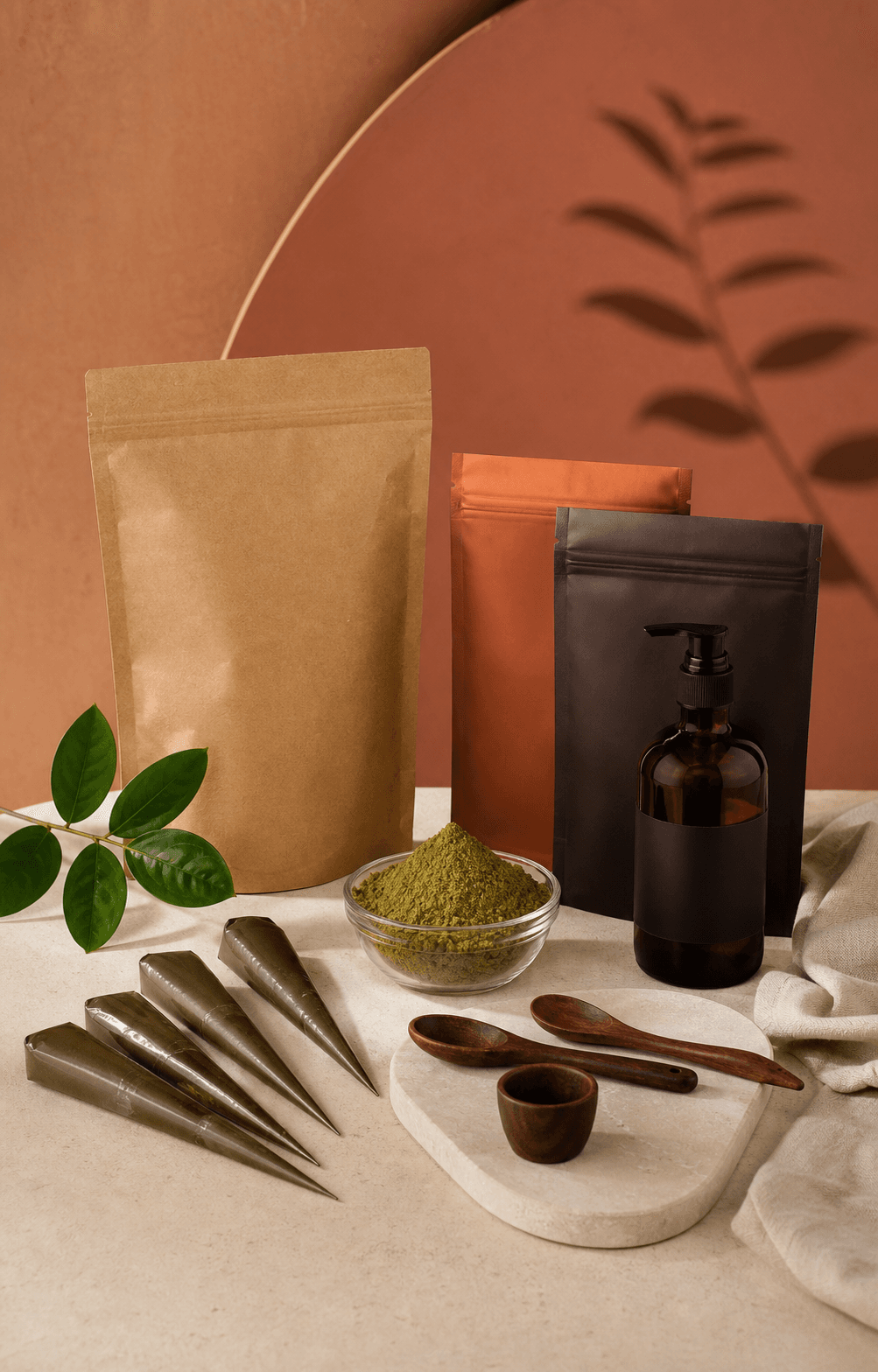
Store henna powder in its sealed original package or a clean airtight container, away from moisture, heat, direct sunlight, air exposure, pests, and strong odors. Keep the original label, lot code, intended use, and supplier's storage and use-by directions. There is no honest universal shelf life for every henna powder.
Powder format slows some problems associated with water-based paste, but it does not make a product timeless. Plant material can take up moisture, absorb odors, become contaminated, or change after repeated heat and humidity exposure. The manufacturer is responsible for establishing an appropriate shelf life for its cosmetic product; the buyer's job is to preserve the conditions on which that guidance depends.
Start with the supplier's directions
Read the full package before transferring anything. Record the product identity, botanical name when provided, intended use, ingredients, net weight, responsible company, origin information where required, lot or batch code, date markings, and storage instructions.
Do not treat "pure," "fresh," "body-art quality," or "triple sifted" as a storage plan. Ask the seller how the product was packaged, what conditions it requires before and after opening, and how its stated shelf life was determined. If a listing promises that powder never expires, request evidence rather than repeating the claim.
In the United States, retail cosmetics generally require an ingredient declaration and other label information. Henna products may be marketed for body art, hair, or multiple uses, but intended use matters. Do not assume instructions for hair color automatically authorize skin application.
The four storage controls that matter
**Moisture:** Keep powder and utensils dry. The FDA notes that moisture exposure can make it easier for bacteria and fungi to grow in cosmetics. Never dip a wet spoon into the main package, and do not add water to "refresh" stored dry powder.
**Heat:** Avoid hot cars, windowsills, appliances, and unconditioned storage areas when they conflict with the label. FDA shelf-life guidance says temperature changes and heat can alter cosmetics and can make preservatives break down in formulas that use them.
**Light and air:** Close the package promptly after measuring. Repeated sunlight and air exposure can change color, texture, and odor in cosmetic products. An opaque, well-sealed container can help when the supplier permits repackaging.
**Contamination:** Use clean, dry tools and keep fingers out of the main supply. Do not return leftover powder from a mixing bowl to the package. Store away from food preparation, bathroom humidity, pests, and materials with strong odors.
These controls apply whether the powder will be mixed for hair or another labelled purpose. The exact temperature, including whether refrigeration or freezing is appropriate, must come from the maker. Condensation during temperature changes can defeat the goal of dry storage.
Keep the original package when possible
Original packaging preserves the label and may be selected to protect the powder. If the closure no longer seals, place the whole labelled pack inside a suitable secondary airtight container rather than pouring it into an anonymous jar.
When repackaging is necessary, choose a clean, dry, food- or cosmetic-appropriate container that closes securely and is compatible with the product. Do not reuse a jar that held fragrance, cleaning chemicals, or an unidentified material. Avoid a clear container in direct light.
Store large purchases as smaller sealed portions only when this matches supplier advice. Opening one working portion repeatedly can leave the remaining portions undisturbed. Dividing powder does not extend the maker's date or turn old stock into a new batch.
Label every opened or divided package
Write the product name, supplier, lot code, intended use, original date marking, date opened, date divided, and required storage conditions on every portion. If you use more than one powder, include enough detail to prevent mix-ups.
Do not label a home-filled bag simply "henna." Hair-color henna, body-art powder, blended botanical products, indigo, cassia, and premixed powders may look similar. A lost label also means lost warnings and traceability.
Keep the invoice or product-page record with the package. If the supplier issues a recall or you need to report a problem, the lot and seller details are far more useful than a photograph of unmarked green powder.
For professional use, rotate stock so earlier appropriate inventory is evaluated and used according to its dates before newer stock. Do not combine different lots in one container; combining erases traceability and makes any performance problem harder to investigate.
How to assess an opened powder
Start with the label and storage history, not a home freshness trick. A powder can look normal and still be outside the maker's supported period. Conversely, natural variation in color does not by itself prove spoilage.
Discard or contact the supplier when the package is damaged, wet, unsealed on arrival, contaminated, recalled, missing critical identification, or stored outside its required conditions for an unknown period. Concerning changes can include unexpected clumping from moisture, visible growth, insects, a clearly abnormal odor, or foreign material.
Do not taste powder to assess freshness. Do not rely on smell alone, and do not mix a questionable batch for a skin test. A test stain measures color performance under particular conditions; it cannot certify purity or microbiological safety.
If performance is the only concern and the product remains within labelled conditions, contact the supplier with the lot code and photos. Follow its product-specific test method rather than inventing a universal release time or stain target.
Powder is not the same as prepared paste
Once liquid is added, the storage question changes. Prepared paste may have a much shorter useful period and can require a specific temperature, container, and discard time. Follow the exact recipe and storage directions supplied with the product.
Do not pour mixed leftovers back into dry powder. Do not add water or saliva to a drying cosmetic product; FDA consumer guidance warns that adding water or saliva to cosmetics can introduce microorganisms.
Label mixed paste with its ingredients, lot, preparation time, and storage condition. If you cannot identify when it was mixed or how it was stored, do not sell or apply it.
Buying powder with storage in mind
Choose a quantity you can use within the seller's supported period. A bulk discount is poor value if half the package will sit through uncontrolled heat or repeated opening.
Before ordering, check packaging type, net weight, full ingredients, lot and date information, shipping conditions, storage directions, return policy for damaged seals, and seller contact details. Ask how hot-weather delivery may affect the product and what evidence the seller needs for a transit claim.
The practical rule is simple: preserve the label, keep powder sealed and dry, control heat and light, prevent contamination, and trust product-specific stability information over folklore. When history or identity is uncertain, replacing the powder is safer than guessing.
Compare henna powder and premixed cones, use the online henna buying checklist, or browse henna powder for hair.
Frequently asked questions
Does henna powder expire?
Every product has a finite supported period, but there is no universal date for all henna powder. Follow the maker's shelf-life, storage, and use-by guidance.
Should henna powder be refrigerated or frozen?
Only when the supplier directs it. Incorrect temperature changes can create condensation, so keep the powder sealed and follow product-specific instructions.
Can I use clumpy henna powder?
Clumping may indicate moisture exposure. Check the seal, label, dates, and storage history and contact the supplier; discard powder that is wet, contaminated, abnormal, or of uncertain history.
Can I store henna powder in a clear jar?
Use the original package when possible. If repackaging is permitted, choose a clean, dry, compatible airtight container, preserve the full label, and protect it from direct light.
Does a test stain prove henna powder is safe?
No. A test may show color performance under specific conditions, but it cannot certify ingredient identity, purity, or freedom from contamination.