
The right way to remove a temporary tattoo depends on what created it. A water-transfer decal or cosmetic adhesive sits on top of the skin and may be loosened. Natural henna and jagua color the outer skin, so there is no reliable instant eraser: the mark fades as stained surface cells are naturally shed.
Start with the maker's removal instructions. If the ingredient list is missing, the design is causing discomfort, or the product was sold as "black henna," treat removal as a safety question rather than a beauty hack. Do not use household bleach, undiluted essential oils, acetone, or aggressive abrasion on skin.
First identify the type of temporary tattoo

**Water-transfer decal:** Usually arrives on printed backing, transfers with water, and leaves a thin film. Edges may wrinkle or lift with wear.
**Adhesive or ink decal:** May have a clear adhesive layer or a protective backing between color and skin. The FDA notes that decal construction matters because the backing can separate some dyes from direct skin contact, while adhesives or other ingredients can still cause problems for some people.
**Natural henna:** Paste dries on the skin and is removed, leaving an orange stain that develops toward brown or reddish-brown. The remaining color is in the outer skin, not a removable layer of paint.
**Jagua:** A Genipa-based product typically develops blue-black. Like henna, the developed color is a stain rather than a film you can peel away. Finished gels can contain more than one ingredient, so keep the label.
**Cosmetic paint, glitter, or "white henna":** These decorate the surface and are not henna stains. Removal depends on the adhesive, paint, or cosmetic formula. Follow its label and keep products away from eyes and broken skin.
A gentle removal plan by type
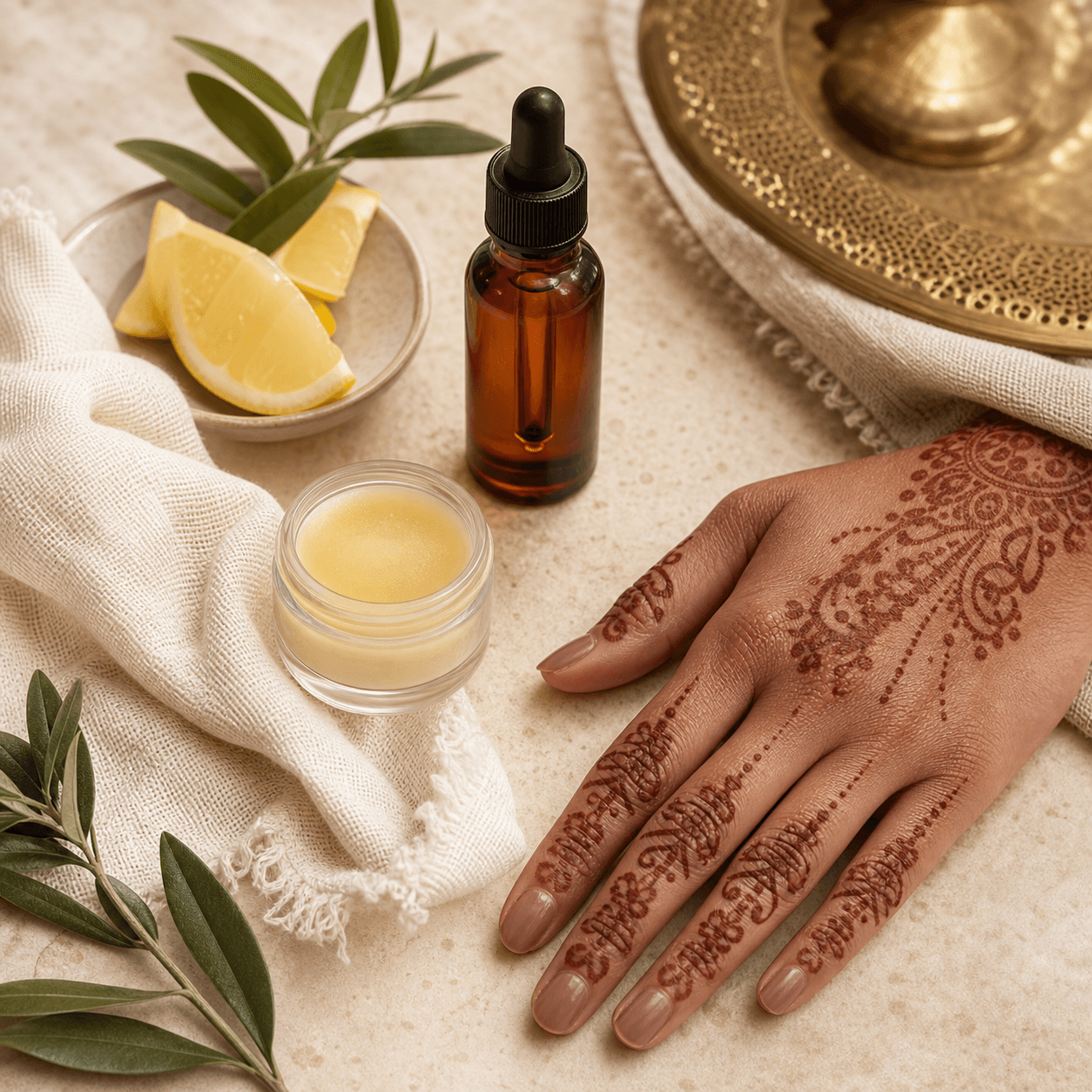
For a decal, wash your hands, then soften the design with warm water and a mild cleanser. If the label recommends an oil-based remover, apply a small amount, wait as directed, and wipe gently with a soft cloth. Repeat later instead of scrubbing until the skin turns red. Wash away residue and stop if irritation begins.
For cosmetic body paint or glitter, use the maker's named remover. Loose glitter should be lifted carefully rather than rubbed across skin. Never pour an unlabeled solvent over a large area, and do not substitute nail-polish remover unless the cosmetic manufacturer specifically identifies it as suitable for that product and skin use.
For henna or jagua, accept gradual fading. Ordinary bathing and normal skin-cell turnover will reduce the stain over time. A gentle wash may remove surface residue, but repeated exfoliation cannot safely promise same-day removal. Moisturize if washing leaves the area dry, and avoid creating tiny abrasions in an attempt to speed the process.
If you need the mark less visible for work or an event, clothing or a skin-appropriate concealer may be more realistic than trying to strip the skin. Test cosmetics on an unaffected area and do not cover a rash to hide it.
What not to put on your skin
Internet removal lists often confuse "can dissolve a surface film" with "is appropriate for skin." Avoid these shortcuts:
- Household bleach or cleaning spray. They are not temporary-tattoo removers and can injure skin.
- Repeated rubbing with rough towels, salt, sugar, pumice, or stiff brushes. Friction can leave the area raw while the stain remains visible.
- Acetone or paint solvents. These can irritate and dry skin and are not a solution for color already in the outer skin.
- Undiluted lemon juice, fragrance oils, or essential oils. "Natural" does not mean non-irritating.
- Picking, shaving repeatedly, or using strong chemical peels. A cosmetic deadline is not worth damaging the skin barrier.
Never apply a second chemical over a reacting tattoo in hopes of neutralizing it. Preserve the package, seller details, and ingredient list instead.
Removal is not treatment for a reaction
Redness from rubbing should settle once you stop, but a patterned rash, intense itching, swelling, blistering, pain, weeping, or spreading redness needs attention. The FDA has received reports of adverse reactions to decal, henna, and "black henna" temporary tattoos. The American Academy of Dermatology notes that a temporary-tattoo reaction can appear from the time of application up to weeks later.
Gently stop exposure when possible, do not reapply the product, and contact a healthcare professional for concerning symptoms. Seek urgent help for trouble breathing, faintness, facial swelling, or another severe or rapidly worsening reaction. A dermatologist can assess a persistent localized reaction. In the United States, consumers and professionals can also report cosmetic adverse events to the FDA.
Why black henna changes the advice
Natural henna does not produce an instant jet-black stain. The FDA warns that products marketed as black henna may use PPD or other added dyes; PPD is not permitted in cosmetics intended for application to skin in the United States. Removing the dried paste does not undo exposure, and scrubbing an irritated area can make discomfort worse.
If a black temporary design starts burning, itching, or blistering, rinse away remaining product gently and seek medical advice. Keep a photo of the design and packaging. Tell the clinician that the product was marketed as black henna, because the ingredient history is relevant.
Plan removal before application
Before buying, ask how the design is applied, how it is removed, what ingredients touch skin, and how long the maker expects it to remain. Avoid applying a long-lasting stain immediately before a school, workplace, medical, or ceremonial situation that requires bare skin.
Test a decal on a less conspicuous area when the manufacturer recommends it. The FDA specifically suggests considering this before using a decal temporary tattoo on the face. Do not place products over cuts, eczema flares, sunburn, or irritated skin, and take extra care around eyes.
The practical rule is simple: lift surface products according to their directions, let true stains fade, and stop treating the skin when removal causes irritation. Healthy skin is a better outcome than an aggressively faded design.
Compare temporary tattoo styles, follow the henna stain timeline, or review natural henna versus black henna.
Frequently asked questions
Can henna be removed immediately?
A developed henna mark stains the outer skin, so washing may remove residue but cannot reliably erase the color immediately. It normally fades as surface skin cells are shed.
Does oil remove a temporary tattoo?
Oil may help loosen some surface decals or adhesives when the product directions recommend it. It does not instantly remove a developed henna or jagua stain.
Can I use acetone or bleach on a temporary tattoo?
Do not use household bleach, paint solvents, or harsh rubbing on skin. They can cause irritation or injury and will not safely erase color within the outer skin.
When should I get medical help for a temporary tattoo?
Seek advice for blistering, marked swelling, pain, spreading redness, or a persistent patterned rash. Breathing difficulty, faintness, or facial swelling requires urgent help.