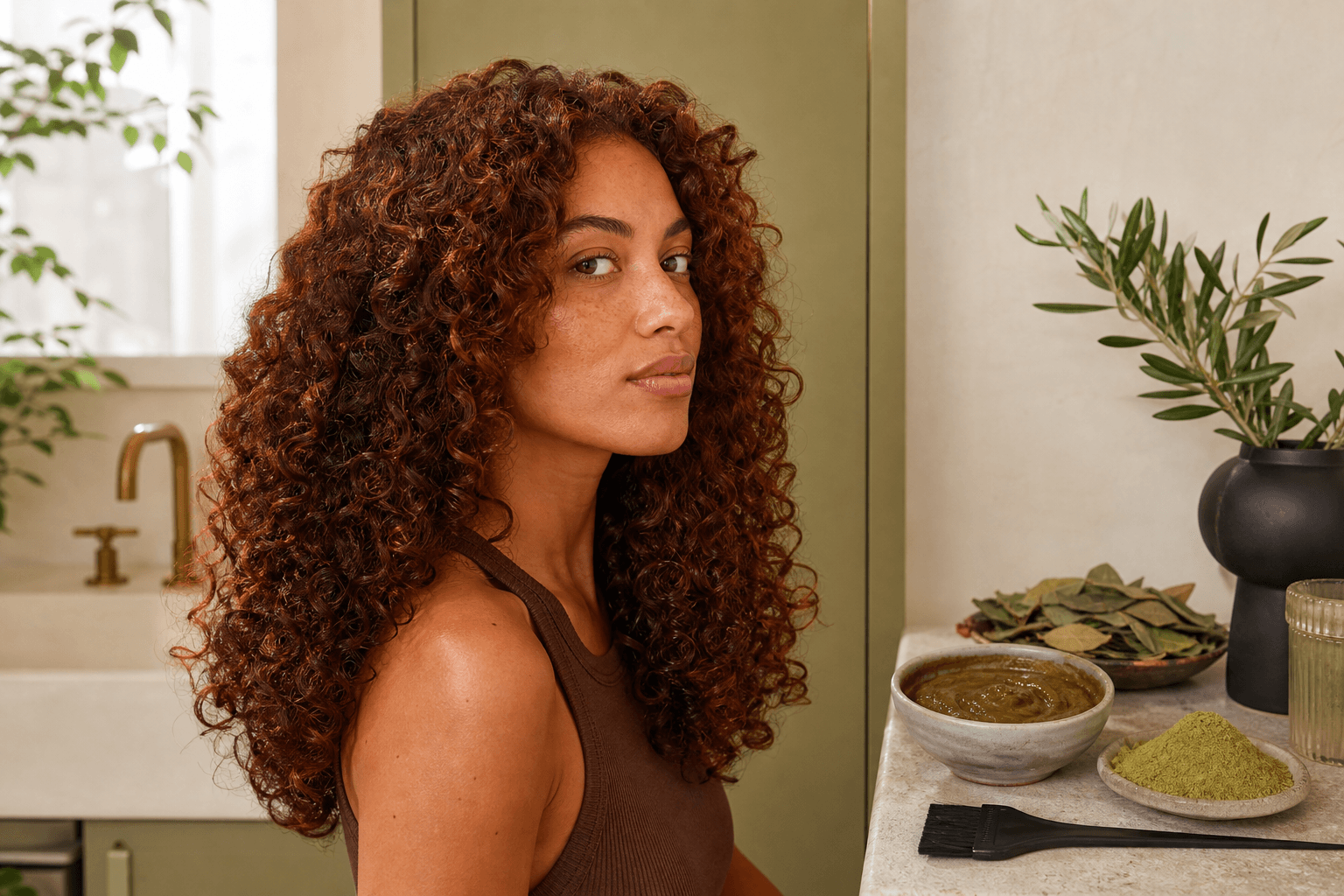
A henna hair strand test is a small rehearsal using the exact product and process you plan to use on your whole head. It can reveal the likely color direction, whether grey strands become brighter than the rest, how the paste rinses out, and whether your timing is practical. It cannot guarantee an identical full-head result, but it is far more informative than choosing a shade from a screen.
The safest plan is to follow the product label first. A strand test checks color and hair response. A skin allergy alert or patch test checks something different and must be performed only as the manufacturer directs. Passing either test does not guarantee that a reaction cannot occur.
Why a henna strand test is worth doing
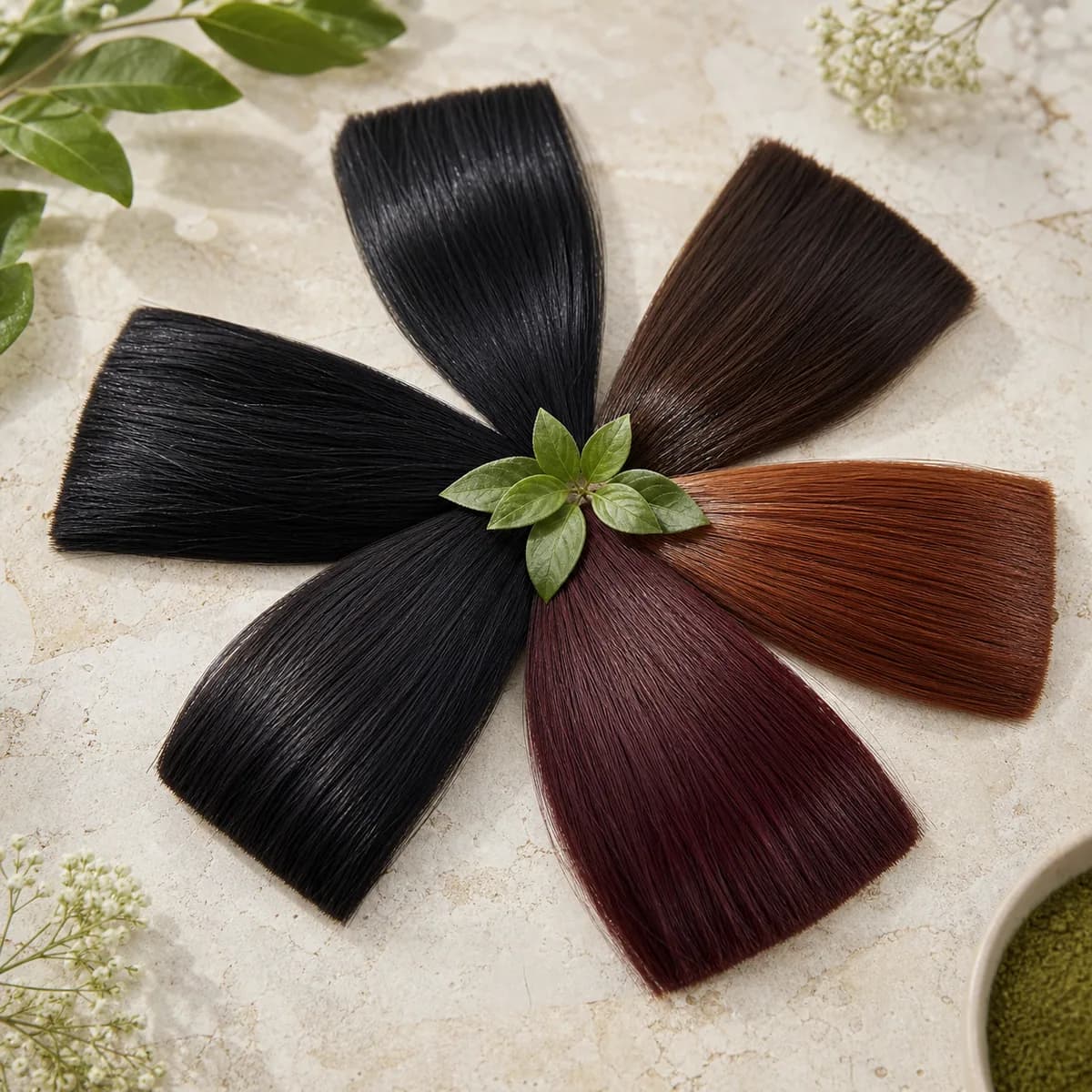
Henna is translucent: it adds color rather than making every starting shade identical. Naturally light, white, or grey hair may show a more visible copper result, while dark hair may gain warmer highlights that are most noticeable in bright light. Previous dye, bleaching, mineral buildup, porosity, and the proportion of grey hair can also make one head develop several tones.
A personal test answers questions a generic color chart cannot. Does the shade look too bright against your complexion? Is one application enough? Does the formula rinse cleanly? Are the promised instructions realistic for your hair? If you plan to combine henna and indigo, a test is especially useful because ingredient ratios, sequence, and starting color all affect the direction of the result.
Do not use a strand test to improvise with an unlabeled product. Check the complete ingredient list and directions before mixing. The FDA identifies henna from the Lawsonia plant as a color additive used in hair dye and advises consumers to follow hair-dye labeling and safety directions. Products called "black henna" may contain PPD; a previous black-henna temporary tattoo can also increase the risk of sensitivity to some hair dyes.
Collect the right sample
The best sample is shed hair collected from a brush over several days. Gather enough to make a small bundle, then separate it into two or three similar portions if you want to compare timing or formulas. Remove lint without soaking the hair in cleaners that you would not use before the real application.
If collected hair is unavailable, choose a narrow hidden section near the nape. This gives a realistic on-head preview, but it also puts the product on your scalp area. Complete every label-directed safety step first, protect nearby skin and clothing, and do not test on irritated, scratched, or damaged skin.
Label each bundle. Include the source of the hair if your test combines grey temple hair and darker lengths. A mixed bundle can hide the contrast you most need to see.
How to run a useful strand test
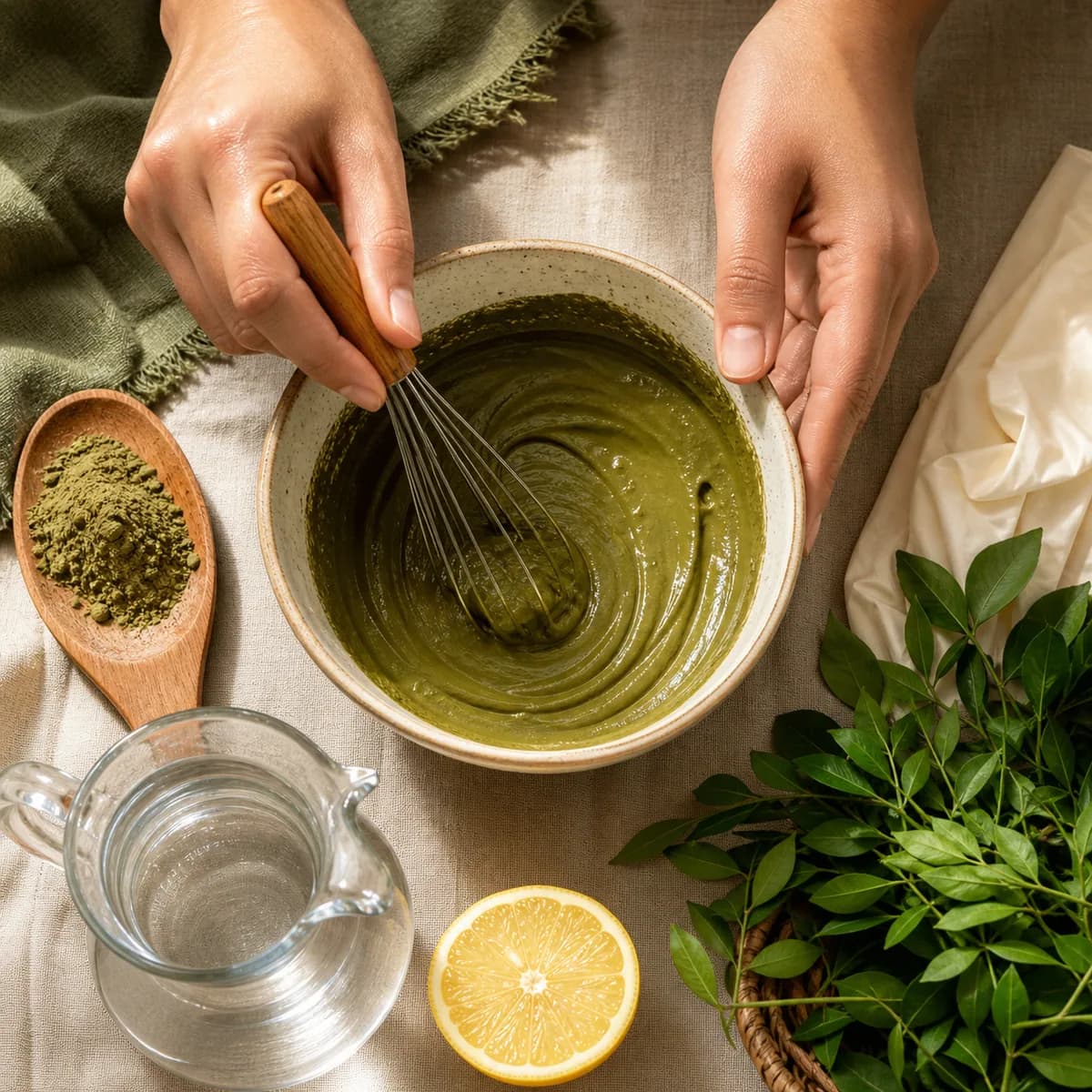
- Read the entire package and record the product name, batch or lot, and ingredient list.
- Scale the recipe accurately. Weighing powder and liquid is more repeatable than estimating spoonfuls.
- Use the same water, temperature, resting time, and additives planned for the full application. Do not add ingredients merely because a social post recommends them.
- Coat the sample completely and keep it under the same covered or uncovered conditions specified by the product.
- Set a timer for the intended processing period. Longer is not automatically better, and label limits still apply.
- Rinse exactly as you plan to rinse your hair. Avoid judging while residue remains on the strands.
- Dry the sample and view it in indirect daylight, indoor light, and strong natural light.
Write the recipe beside the finished sample. A beautiful result is difficult to reproduce when "a little water" and "about two hours" are the only notes.
Wait before making the color decision
Do not decide from a wet strand or the first photograph after rinsing. Botanical color can look different once the sample is fully dry and after it has had time to settle. Follow the brand's stated assessment window; when it gives none, keep observations at consistent intervals rather than inventing a universal promise.
Place the sample against your hair at the roots, mid-lengths, and ends. Photograph it without a beauty filter and record the lighting. Look for overall tone, contrast on grey hair, evenness, feel, and whether the shade works with your goals. A test may show warm reflection without an obvious change indoors, which can still be a meaningful result on dark hair.
Strand test versus skin test
These tests are not interchangeable. A strand test evaluates color and practical handling on hair. A manufacturer-directed skin test is intended to screen for sensitivity to a particular hair-dye formula. The FDA recommends following package directions and performing the instructed skin test every time for products that require one, because formulations and sensitivities can change. The NHS likewise advises following the packet and testing a strand at least 48 hours before use for hair dye.
Do not put a mixed botanical paste on skin as a homemade allergy experiment unless the label specifically tells you to do so. Products differ, and a negative result cannot prove that a later reaction is impossible. Stop if a test causes itching, burning, swelling, rash, or feeling unwell. Seek medical advice for a reaction; breathing difficulty or rapidly worsening symptoms need urgent care.
Adjust one variable at a time
If the first result is unsuitable, change only one major factor before retesting: product ratio, processing time within label directions, or application sequence. Changing everything at once makes the result impossible to interpret.
For a shade that is too bright on grey hair, compare a second clearly documented formula rather than repeatedly layering an unknown mixture. For an unexpectedly dark result, do not assume shampoo will reverse it. Henna is generally chosen for durable color, so testing before full coverage matters.
Keep a simple color record
Save the dry sample in a labeled envelope with the date, starting-hair description, weights, liquid, timing, rinse method, and photographs. Note any recent bleach, permanent dye, relaxer, or other chemical service. If the manufacturer warns against combining its product with another treatment, follow that warning and contact the company for product-specific advice.
A careful strand test turns hair-color shopping into a measured decision. Start with disclosed ingredients, reproduce the intended process, assess the dry result in several lights, and keep safety testing separate. Then you can buy and mix the amount you need with a clearer expectation of the result.
Compare options in the henna hair color collection, review the hair color chart, or learn about henna and indigo.
Frequently asked questions
How long before coloring should I strand-test henna?
Follow the product instructions. Allow enough time to complete the stated processing and assessment window before the full application; the NHS advises testing a hair-dye strand at least 48 hours beforehand.
Can I use hair from my brush for a henna strand test?
Yes. Collected shed hair is useful because it avoids committing a visible section. Keep grey and pigmented strands in separate labeled bundles if you want to compare their results.
Is a henna strand test the same as a patch test?
No. A strand test previews color and handling on hair. A label-directed skin test screens for sensitivity to a particular formula. Complete each test exactly as the manufacturer requires.
Why did my grey hair test brighter than my dark hair?
Henna adds translucent color, so a light or grey starting strand can display copper more visibly while a dark strand may show mainly warm highlights.