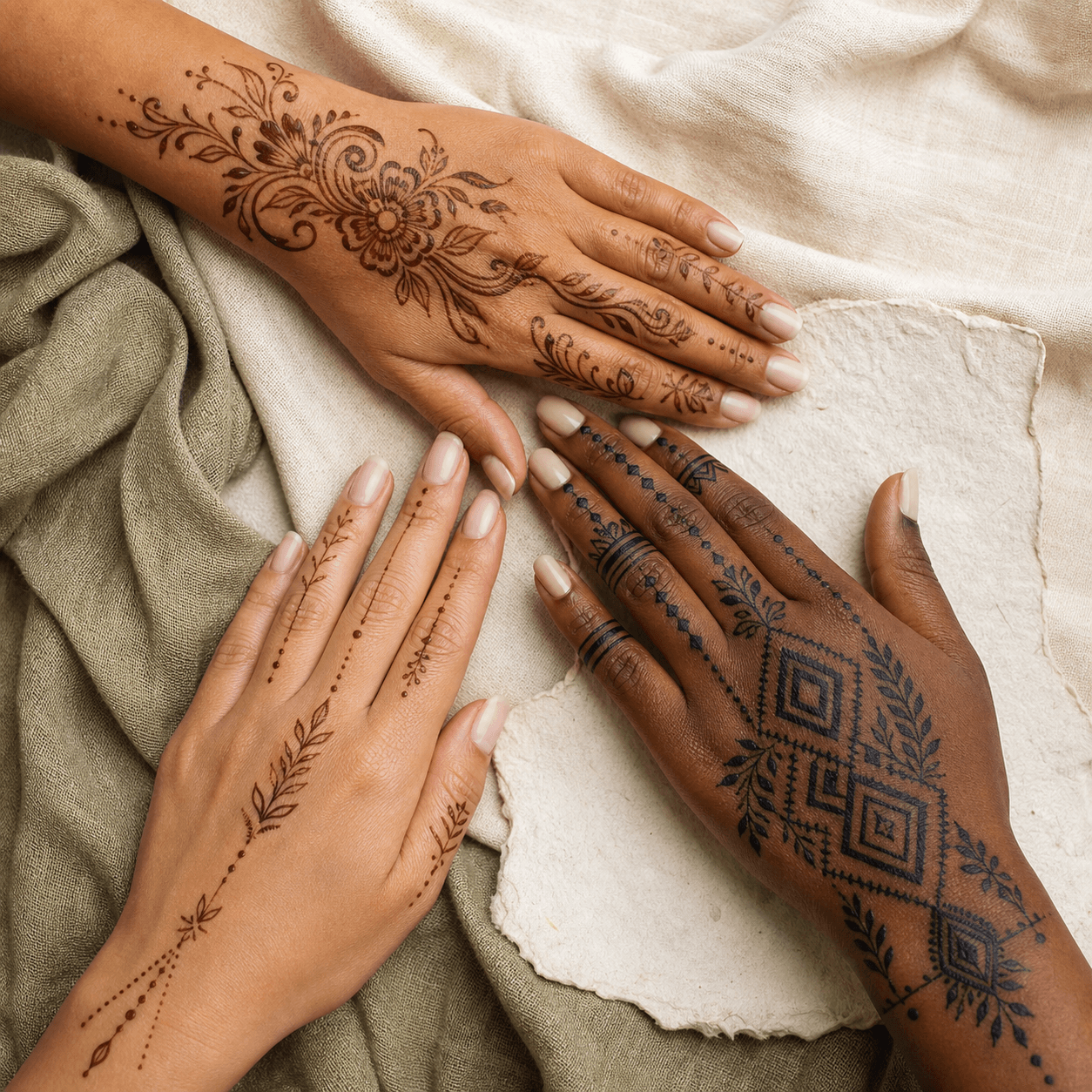
Henna for kids requires more than choosing a cute design. A parent or guardian should know exactly what will touch the child's skin, reject black henna and undisclosed fast-staining products, check that the skin is healthy, and understand what to do if a reaction begins.
No checklist can declare every product safe for every child. Cosmetics can cause irritation or allergy, labels and local rules vary, and a child with eczema, previous reactions, or another skin condition may need individual advice from a healthcare professional. The safest decision is always to skip the application when ingredients or hygiene cannot be verified.
Rule one: say no to black henna
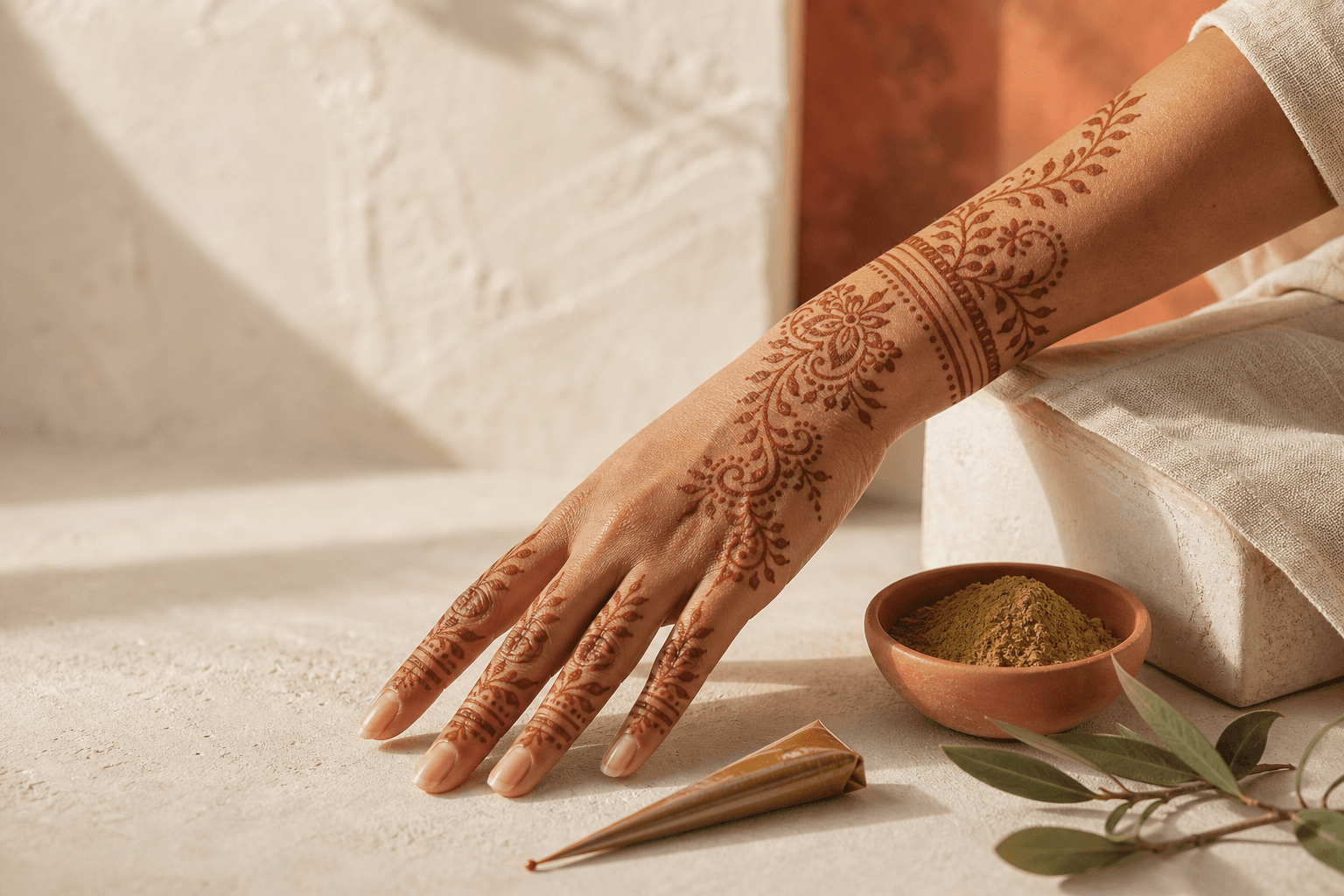
Natural henna typically leaves an orange stain that develops toward brown or reddish-brown. It does not create an immediate jet-black result. The FDA warns that products marketed as "black henna" may contain added hair-dye ingredients such as p-phenylenediamine (PPD), which can cause dangerous skin reactions in some people. In the United States, PPD is not permitted in cosmetics intended for direct skin application.
Do not rely on a seller saying a paste is "natural," "herbal," or "chemical-free." Ask for the complete ingredient list and original product label. Avoid a paste when the artist will not disclose the recipe, transfers it from an unmarked bottle, promises instant black color, or says a reaction is impossible.
This matters beyond the temporary design. FDA and NHS hair-dye guidance both note that exposure to black-henna temporary tattoos can increase sensitivity to PPD in later hair-dye use. Keep the product name and ingredient information with the child's records if an exposure or reaction occurs.
Read the label like a parent, not a marketer
Confirm the product name, manufacturer or responsible seller, full ingredients, intended body area, age restrictions, warnings, application method, contact time, paste-removal instructions, and expected stain color. Retail cosmetics in the United States generally need an ingredient declaration, according to the FDA, although products used only by professionals may not be covered by the same retail-label requirement. That gap makes asking the artist essential.
If the formula includes an essential oil, fragrance, adhesive, glitter, or cosmetic color, ask about that ingredient too. "Henna" on the front does not mean henna is the only material in the cone. Do not approve homemade additions that are not disclosed.
Follow the maker's age guidance. Never assume an adult product is suitable for a toddler, never apply it near eyes or lips, and keep cones and loose materials where children cannot squeeze or swallow them. If a child cannot avoid touching wet paste and then touching their mouth or eyes, postpone the design.
Check the child's skin and history
Do not apply body art over cuts, scrapes, sunburn, rash, eczema flares, infection, or already irritated skin. Ask whether the child has reacted to cosmetics, adhesives, fragrances, hair dye, face paint, or temporary tattoos before. A previous reaction is a reason to stop and seek professional guidance, not to run a casual home experiment.
A small trial cannot prove that a later reaction will not happen. If a product has manufacturer instructions for an allergy alert test, follow those instructions exactly and do not invent a test by leaving concentrated paste on the skin. The FDA notes that reactions can still occur even after a negative hair-dye skin test; temporary body-art products also vary widely.
For children with an established skin condition or serious allergy history, ask their clinician whether temporary body art is appropriate. An artist should not diagnose an allergy or overrule medical advice.
Check the setup at a party, fair, or salon
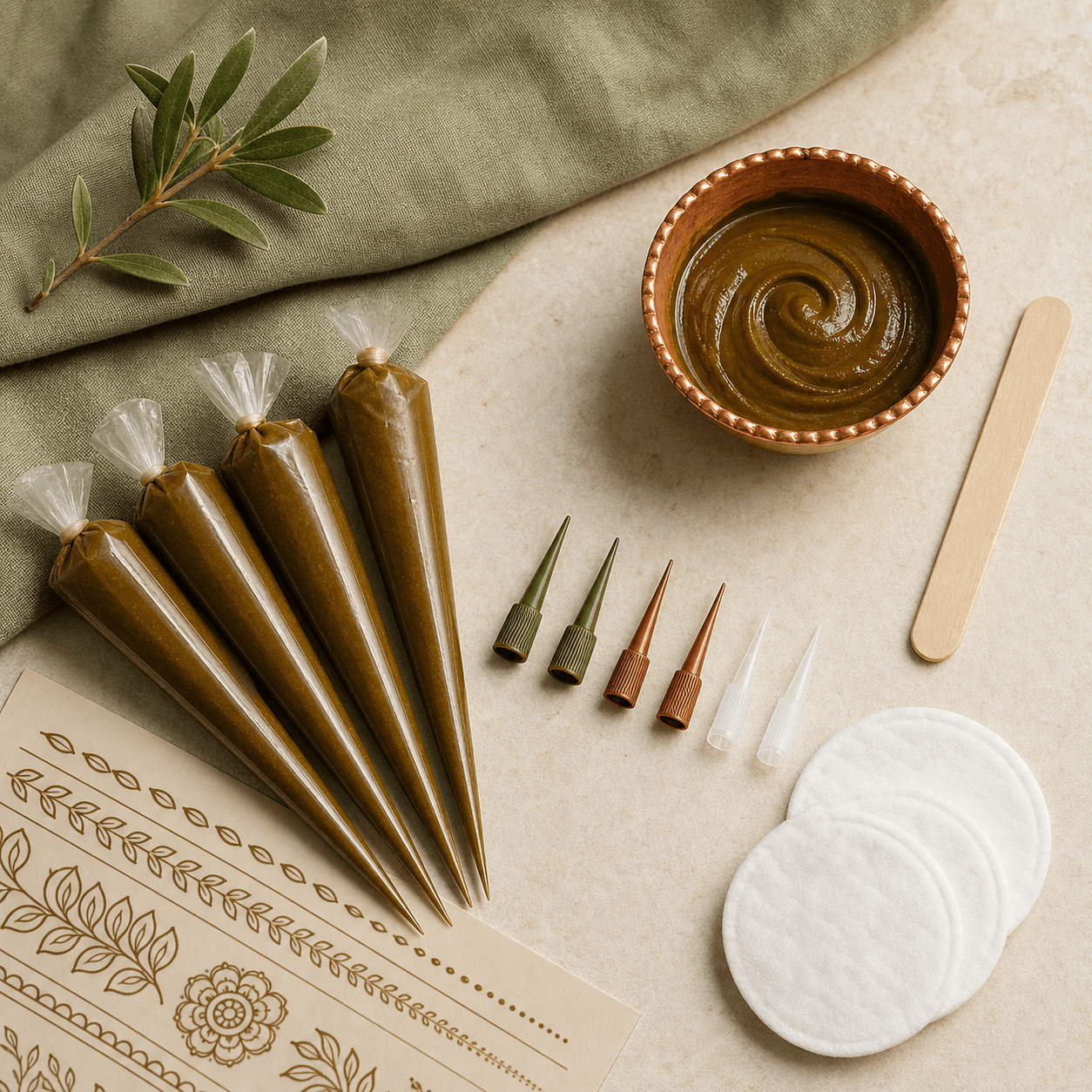
Watch how the artist works before your child's turn. They should be willing to answer questions without rushing. Look for clean hands, a cleanable work surface, protected supplies, and a fresh applicator or a clearly explained disinfection process. The cone tip should not touch another person's skin and then return to a shared product in a way that creates contamination risk.
Ask who supervises the drying period and how smears are handled. At a party, give each parent the ingredient information and aftercare directions before application, not after the artist leaves. Keep food and drink away from the application table, and prevent children from sharing cones.
Choose a small design for a first experience. It shortens the appointment, reduces the amount of product used, and is easier to keep away from eyes and mouth. Avoid wrapping a child's design in a way that could become tight, trap excessive heat, or create a choking or entanglement hazard.
Set realistic color and timing expectations
Explain that natural henna is not black when finished. The paste sits on top at first; after removal, the stain usually starts orange and develops darker. Exact color and duration vary with the product, body area, skin, care, and normal shedding. Do not let a promise of "black in minutes" override the ingredient check.
Plan around school policies, sports, performances, medical appointments, and uniform rules. A true stain cannot be peeled off on demand. If the child may need bare skin tomorrow, choose a removable decal from a transparent, reputable supplier instead of a longer-lasting stain, and still follow its age and ingredient directions.
Know the signs of a reaction
Stop the application if the child reports burning, strong itching, pain, dizziness, or feeling unwell. Gently remove remaining product according to its directions and do not apply another substance to "neutralize" it.
The American Academy of Dermatology describes temporary-tattoo reactions that can include redness, swelling, itching, and bumps in the design pattern; reactions may appear immediately or later. Blistering, marked swelling, pain, spreading redness, weeping, or a persistent patterned rash warrants medical advice. Trouble breathing, faintness, facial swelling, or rapidly worsening symptoms require urgent care.
Photograph the reaction, keep the packaging, and write down when the design was applied and symptoms began. Tell the healthcare professional if the product was called black henna or promised a rapid black stain. In the United States, cosmetic problems can also be reported to the FDA.
The five-minute parent decision
Before saying yes, make sure you can answer five questions: What is every ingredient? What color and timing are realistic? Is the child's skin intact? Is the setup clean? What will we do if discomfort begins?
If any answer is missing, skip the design. A trustworthy artist or seller will respect a parent's caution and provide enough information for an informed choice.
Read natural henna versus black henna, use the henna artist booking checklist, or browse simple design ideas.
Frequently asked questions
Is natural henna safe for every child?
No product can be guaranteed reaction-free for every child. Verify ingredients and age directions, avoid damaged skin, and seek individual medical advice for eczema, serious allergy history, or previous reactions.
What color should natural henna be on a child?
Natural henna generally leaves orange color after paste removal and develops toward brown or reddish-brown. An instant jet-black promise is a warning sign for undisclosed additives.
Should children get black henna tattoos?
No. The FDA warns that black henna may contain PPD or other added dyes that can cause dangerous skin reactions, and PPD is not permitted in U.S. cosmetics intended for direct skin application.
What should I do if my child's henna design blisters?
Stop exposure, avoid further home remedies, preserve the package and ingredient details, and seek medical advice. Breathing trouble, facial swelling, faintness, or rapidly worsening symptoms require urgent help.
Can a patch test guarantee there will be no reaction?
No. Follow any manufacturer-directed test exactly, but a negative result cannot guarantee that a later reaction will not occur.