


A professional henna or temporary body-art workstation should separate clean supplies, active application tools, client belongings, and waste. The core routine is simple: clean hands, inspect intact skin, use traceable products, prevent applicator contamination, clean appropriate surfaces between clients, and follow local rules. A tidy table is not enough unless the workflow also stays controlled.
Design the table in one direction
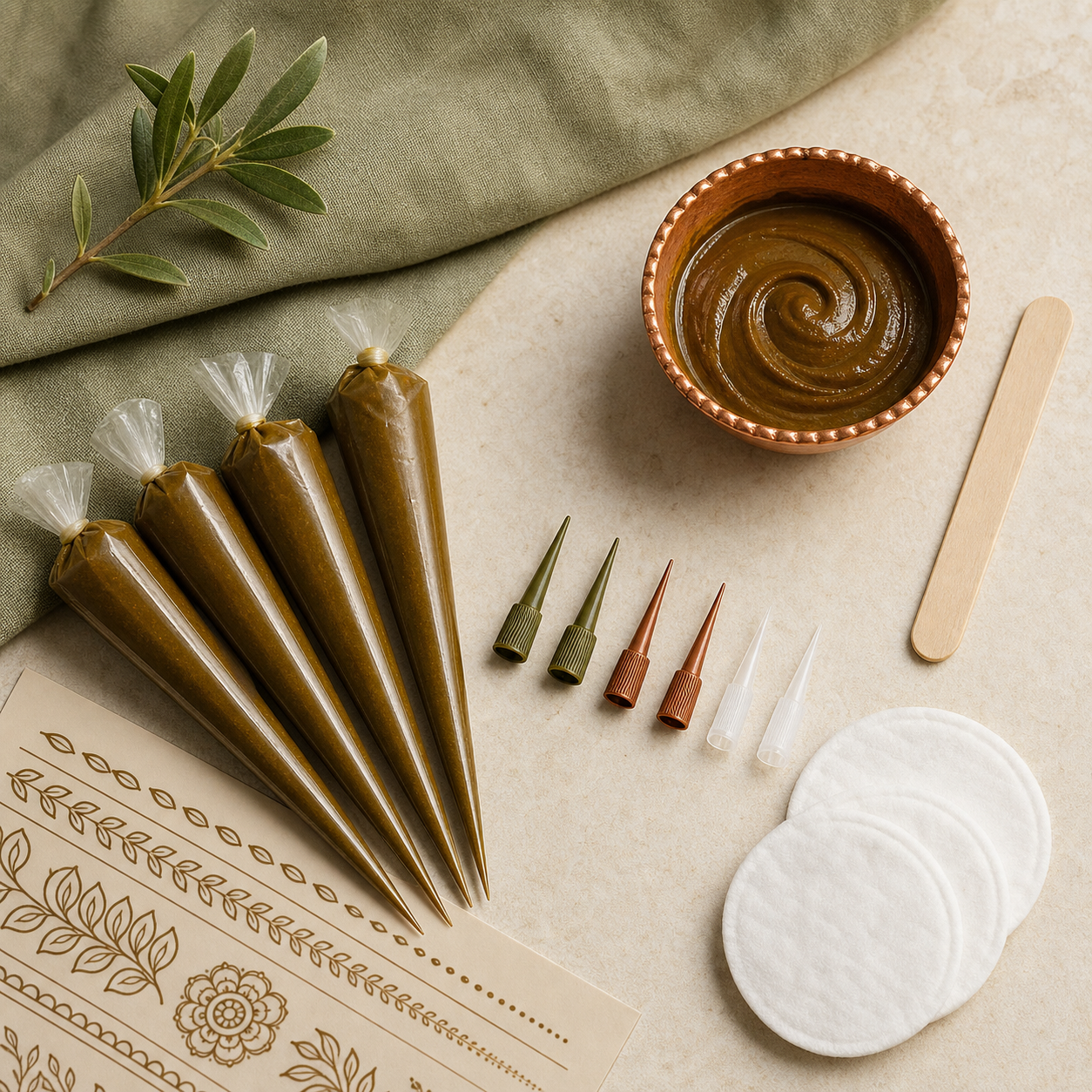
Arrange the station so work moves from clean to used without crossing back. Keep unopened or protected supplies on one side, the active application area in the center, and a lined waste container on the used side. Phones, bags, cash, drinks, and personal items should not share the application zone.
Only place the quantities needed for the current session on the table. Store reserve cones, bottles, tips, cotton, and packaging closed and protected. Label decanted products with identity and required traceability; never rely on memory or color alone.
Clean hands at the right times
Clean hands before setting up, before touching a client’s skin, after handling waste or personal items, after coughing or using the restroom, and whenever they become visibly soiled. CDC guidance recommends washing with plain soap and clean running water, scrubbing for about 20 seconds, then drying completely. When soap and water are unavailable, CDC recommends an alcohol-based sanitizer containing at least 60% alcohol, while noting that soap and water remove more types of germs and chemicals.
Gloves do not replace hand hygiene. If gloves are appropriate for the service or required locally, use them for a defined task, change them when contaminated or torn, and clean hands at the required points. Do not touch a phone, payment terminal, drawer, and client with the same gloves.
Control applicator contact
Prevent the cone or bottle tip from touching broken skin, unclean surfaces, or used materials. Do not return unused product from a client-contact container to bulk stock. Single-use items should remain single use; reusable equipment needs a documented cleaning method appropriate to its material and local requirements.
Test line flow on a disposable clean surface before approaching the client. If a tip clogs, replace or clear it using the product maker’s safe method away from the client. Avoid improvised pins or tools that are then returned to the clean zone.
Inspect the client area and skin
Ask where the design will be placed and visually check that the skin is intact. Do not apply over cuts, active rashes, blistering, infection, severe sunburn, or unexplained irritation. Review the product’s age, allergy, and use restrictions, and never present “natural” as a guarantee that a reaction cannot occur.
Show or provide the ingredient information and aftercare directions for the exact product. The FDA notes that retail cosmetics generally require ingredient declarations and reports adverse reactions to some temporary tattoo products. Products marketed as black henna may contain PPD and should not be treated as ordinary natural henna.
Clean surfaces between clients
Remove waste, clean visible soil, and use a surface product appropriate for the material and setting according to its label. Respect required contact time rather than wiping it away immediately. Replace disposable table barriers when used. Allow cleaned areas to dry as directed before rebuilding the clean zone.
Local health, cosmetology, event, or temporary-tattoo rules may specify additional requirements. This checklist is operational guidance, not a substitute for the rules in your location or venue contract.
Close the session with records
- Record the product, batch or lot, opening date, and service date.
- Store client consent or service notes according to applicable privacy rules.
- Discard waste without compressing it by hand.
- Return protected stock to its labelled storage.
- Clean reusable tools and surfaces using documented methods.
- Review any reaction or near-miss before the next client.
Browse Tools and Supplies, the Artists section, and Body Art for related resources.
Frequently asked questions
Do gloves replace handwashing?
No. Gloves can become contaminated and must be used for a defined task. Clean hands at appropriate times and follow local requirements.
Can one henna cone be used for several clients?
Do not share an applicator when its tip may contact skin or become contaminated. Use a controlled single-client or single-use policy consistent with local rules.
Is hand sanitizer always enough?
No. CDC recommends soap and water when hands are visibly dirty and notes that washing removes more types of germs and chemicals. Use sanitizer according to CDC and local guidance when washing is unavailable.
What records should an artist keep?
At minimum, retain product identity, batch or lot, date, storage or opening information, and service notes allowed by applicable privacy rules.
