


Jagua gel and jagua ink can both describe temporary body-art products made with ingredients associated with Genipa americana fruit, but the names are not reliable quality grades. The better choice is the product with a complete ingredient list, clear directions, traceable seller, suitable applicator, and storage instructions you can follow. This guide shows what to compare before buying.
That matters because “gel” and “ink” are used inconsistently by sellers. One shop may call a thicker, cone-ready formula a gel while another uses “ink” for a similar product in a bottle. Start with the label and intended use, not the marketing name.
Jagua gel vs jagua ink at a glance
- Choose a cone or fine-tip gel when you want controlled lines, dots, and filled motifs.
- Choose a bottle-based product only when its applicator and viscosity suit your technique.
- Choose neither when ingredients, directions, seller identity, or storage requirements are missing.
1. Compare the ingredient disclosure first
A useful product page should identify the ingredients rather than relying on phrases such as “natural,” “premium,” or “professional.” Read the list for the complete formula, including colorants, preservatives, fragrances, thickeners, and other additives. If the disclosure is incomplete, ask the seller before placing the product on skin.
The U.S. Food and Drug Administration explains that cosmetics can cause allergic reactions and advises consumers to read ingredient labels. The FDA also warns that products marketed as “black henna” may contain added hair-dye ingredients such as PPD. Jagua is not black henna, but that distinction is precisely why an honest ingredient list matters. Avoid any seller that blurs those categories.
2. Match the applicator to your design
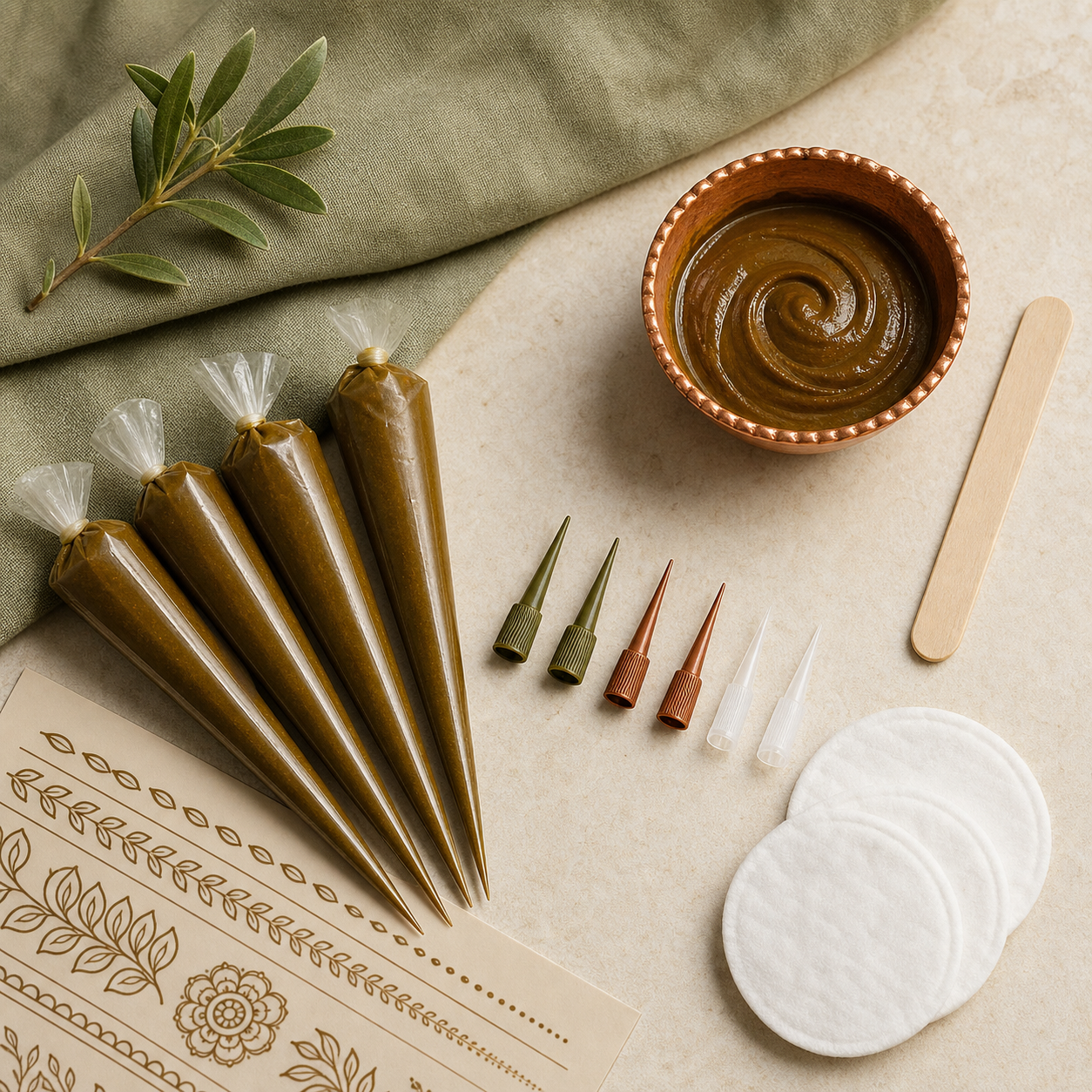
For line work, consistency and tip control are more useful than the word “gel.” A cone can support long continuous lines and variable pressure. A precision bottle may be easier to refill and can accept different tips. A wider nozzle may suit larger filled areas but make tiny details difficult.
Before buying, check whether the listing shows the actual tip, closure, quantity, and replacement parts. Beginners often benefit from a manageable applicator and a formula intended for direct body-art use. Experienced artists may prioritize interchangeable tips or batch consistency.
3. Check directions, storage, and traceability
Good directions explain skin preparation, application, contact time, removal, expected stain development, storage, and what to do after opening. They should also identify the maker or responsible seller and provide a batch, lot, or other traceability detail when appropriate. Cosmetics can change with time and storage, so follow the stated conditions instead of assuming every jagua product has the same shelf life.
Look for a tamper-evident package, a readable label, and realistic claims. A seller should not promise an identical shade on every person: technique, formula, skin site, aftercare, and individual factors can all influence appearance. Do not use a product that smells unusual, has separated in a way the maker does not describe, has damaged packaging, or is past its stated usable period.
4. Understand stain development
Jagua body art is chosen for its cool blue-black appearance, but the color generally develops after the product is removed rather than appearing fully mature immediately. Follow the maker’s timing and aftercare. Do not extend contact time beyond the directions in an attempt to force a darker result.
Keep the design area clean and avoid using the product on irritated or broken skin. If you have known cosmetic sensitivities, review the ingredients carefully and seek professional advice when appropriate. Stop use and wash the area if irritation occurs; urgent or severe symptoms need prompt medical attention.
A practical buying checklist
- Confirm the product is intended for temporary body art on skin.
- Read the complete ingredient list and allergy information.
- Compare the tip or bottle with the detail level you need.
- Check storage, opening, and use-by directions.
- Choose a seller with clear identity, contact details, and traceable packaging.
- Reject exaggerated guarantees and products presented as interchangeable with black henna.
For a broader introduction, visit our Jagua guide. You can also compare application equipment in Tools and Supplies and browse the Body Art section.
Frequently asked questions
Is jagua gel the same as jagua ink?
Not necessarily. Sellers use the terms differently. Compare the full formula, viscosity, applicator, directions, and intended use rather than assuming one name defines a standard product.
Which is better for fine lines?
A controlled, fine-tip applicator paired with a suitable consistency is usually more important than whether the listing says gel or ink. Review tip size and product photos before buying.
Is jagua the same as black henna?
No. Jagua products and products marketed as black henna should not be treated as the same category. Check ingredients and avoid products with unclear composition.
How should I store jagua?
Follow the exact label because formulas and packaging differ. Keep the product closed, protect it from unsuitable heat or contamination, and discard it when the maker’s directions or product condition indicate it should not be used.